
- On July 30, 2026
- In blog
A Comprehensive Guide to Automotive PCBs: Manufacturing, Standards, and Suppliers
You might upgrade your smartphone every two or three years, but you expect your vehicle’s Electronic Control Units to operate flawlessly for decades. An automotive PCB must endure a demanding 10- to 20-year service life—consistently withstanding extreme thermal cycling, relentless mechanical vibration, and heavy electromagnetic interference. In the automotive sector, a single trace failure isn’t just a minor glitch; it is a catastrophic safety risk. Because the stakes are so high, Original Equipment Manufacturers and Tier-1 automotive suppliers look far beyond unit cost when vetting PCB partners.
Located in Shenzhen, China, FastlinkPCB specializes in advanced PCB fabrication, delivering high-reliability solutions—including multi-layer, HDI, and Rigid-Flex PCBs—tailored for demanding automotive, industrial control, and mission-critical applications.
In this comprehensive guide, we will walk you through the entire lifecycle of automotive PCB manufacturing across three core pillars: manufacturing processes, stringent quality standards, and supplier qualification strategies.
What is an Automotive Electronics PCB?
An Automotive Electronics PCB is a specialized, high-reliability printed circuit board engineered specifically to withstand the harsh operating conditions of modern vehicles. Serving as the electrical backbone of automotive hardware, it provides the physical mounting and precise signal routing necessary to keep critical Electronic Control Units (ECUs) running continuously without failure.
Core Automotive Applications
As vehicles transition toward electrification and autonomous driving, modern automotive PCBs are deployed across a wide range of critical subsystems:
- Electric Vehicle Battery Management System (EV BMS)
- Advanced Driver Assistance Systems (ADAS)
- Engine Control Unit (ECU)
- Motor Control System
- Vehicle Lighting System
- Infotainment System
- Charging System
- Sensor Module
With the rapid acceleration of vehicle intelligence and electrification, the volume of electronic controllers per vehicle continues to skyrocket. This shift is driving demand for increasingly complex PCB architectures capable of handling higher thermal loads, strict signal integrity, and zero-defect reliability standards.
Why Automotive PCBs Demand Extreme Reliability?
Unlike consumer gadgets that are replaced every few years, automotive electronics are expected to perform flawlessly over a 10- to 20-year vehicle lifespan. Meeting this standard requires overcoming three primary engineering challenges:
1.High-Temperature and Thermal Stability
Operating temperatures inside a vehicle fluctuate wildly depending on location. In the engine bay or near power electronics, PCBs face sustained high ambient temperatures, rapid thermal shocks, and continuous thermal cycling. In Electric Vehicle battery packs, boards must endure continuous heat generated by high-current draw.
To survive these environments without degrading, automotive boards require advanced laminates with high thermal stability:
- High Tg: Specifying High-Tg substrates ensures the laminate resin maintains its structural rigidity under extreme operating heat.
- Low CTE: Minimizing Z-axis CTE prevents the board from expanding vertically, which protects copper-plated through-holes from cracking.
- Specialized Thermal Substrates: Utilizing MCPCB or heavy-copper constructions accelerates heat dissipation away from power components.
Why it matters: Standard FR-4 laminates exposed to prolonged thermal stress can suffer from delamination (layer separation), weakened copper foil adhesion, and trace fractures—resulting in complete ECU failure.
2.Vibration Resistance and Mechanical Durability
Road vibration and mechanical shock present a constant structural threat. In powertrain modules, motor inverters, and wheel-hub sensor packages, mechanical fatigue is a leading cause of field failures.
Unrelenting road chatter can cause micro-fractures in solder joints, crack plated via barrels, and shear delicate inner-layer connections. To guarantee structural integrity, PCB factories must enforce rigid quality controls during fabrication:
- Ensuring uniform, void-free copper plating inside drill holes (minimum20μm to 25μmbarrel thickness).
- Maintaining pristine hole-wall quality during drilling to eliminate micro-cracks before plating.
- Regulating lamination pressure and resin flow to eliminate internal micro-voids between copper layers.
3.Long Lifecycle Supply and Traceability
Beyond physical performance, automotive OEMs demand long-term supply continuity and strict manufacturing consistency. Vehicle development cycles span several years, followed by a mandatory decade-long requirement for replacement parts availability—a stark contrast to the rapid iteration cycles of consumer electronics.
Qualifying an automotive PCB partner means choosing a supplier with rigid process change controls (PCN procedures), robust engineering support, and deep supply-chain stability. Every batch produced today, five years from now, or ten years from now must match the exact chemical and structural tolerances of the original qualified prototype.
Key Manufacturing Technologies for Automotive PCBs
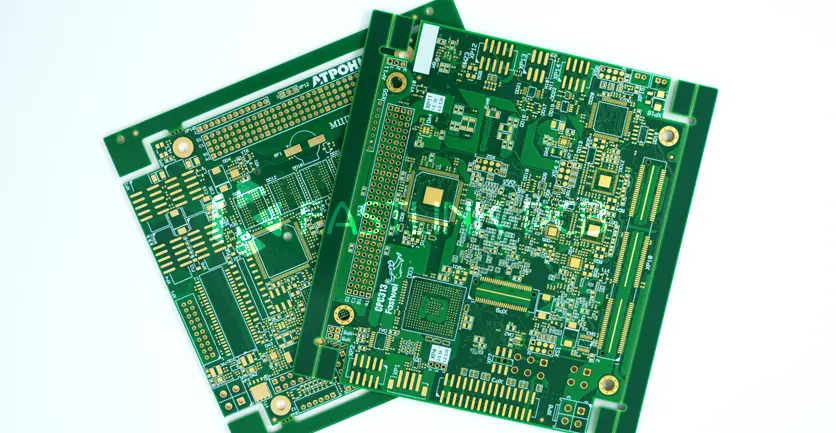
HDI PCBs in Automotive Applications
As autonomous driving features, telematics, and vehicle electrification advance, automotive electronic architectures require increasingly complex multi-layer board designs. Multi
layer PCBs are essential for:
- Signal Isolation: Separating sensitive high-frequency analog signals from noisy digital traces.
- Power Management: Incorporating dedicated heavy-copper power planes to distribute high currents cleanly.
- EMI Control: Utilizing ground plane shields to mitigate electromagnetic interference and ensure strict EMC compliance.
- Space Optimization: Packing complex routing into compact module housings.
To meet these tight enclosure and signal density requirements, advanced HDI technology is rapidly becoming the automotive standard.
By integrating microvias, laser drilling, and fine trace/space geometries, HDI technology drastically increases routing density. This makes it the ideal architecture for miniaturized modules such as ADAS radar and camera sensors, central gateway controllers, and high-speed V2X communication modules.
Rigid Flex PCBs in Automotive Applications
Tight spatial constraints inside modern vehicle enclosures require circuit assemblies with high structural flexibility. Rigid-flex PCBs solve these mechanical challenges, making them essential for key applications:
- Automotive Lighting Systems: Adaptive LED headlamp modules, matrix lighting controllers, and ambient cabin light strips.
- Advanced Automotive Sensors: Compact sensor packages for camera vision modules, millimeter-wave radar, and LiDAR units.
In complex vehicle architectures, rigid-flex PCBs address two primary engineering challenges: spatial constraints and long-term reliability.
Key Advantages of Rigid-Flex Architecture
- 3D Dynamic Foldability: The flexible polyimide core allows the circuit to bend, twist, and fold around tight mechanical geometries. This enables seamless installation into irregularly shaped housings, such as tight LED headlamp assemblies or compact dashboard instrument clusters.
- Elimination of Wire Harnesses and Connectors: By replacing traditional discrete wire harnesses and board-to-board connectors with integrated flexible ribbons, rigid-flex designs reduce overall weight—improving fuel efficiency in internal combustion engine (ICE) vehicles and extending range in Electric Vehicles.
- Enhanced System Reliability: Connectors and crimped wire harnesses are common points of failure in high-vibration automotive environments. Eliminating these mechanical connection points removes risks like contact fretting, loose plugs, and wire fatigue harness breaks.
- Vibration and Thermal Resistance: Rigid-flex constructions inherently absorb mechanical shock and withstand severe thermal cycling, keeping onboard electronics functioning reliably over years of continuous road vibration.
Automotive PCB Standards and Certification Requirements
Because a failure in a critical vehicle subsystem can lead to life-threatening accidents, automotive Original Equipment Manufacturers (OEMs), regulatory bodies, and supply-chain consortiums mandate strict quality and reliability qualifications.
1.AEC-Q Component Stress and Reliability Qualification
Developed by the Automotive Electronics Council, the AEC-Q standards serve as the universal benchmark for component-level stress testing. They verify whether active silicon, discrete power devices, and passive elements can survive the extreme physical conditions of automotive environments.
- AEC-Q100 (Integrated Circuits): Applies to microcontrollers (MCUs), sensor processors, and application-specific ICs (ASICs). Qualification requires passing battery tests including High-Temperature Operating Life (HTOL), thermal cycling, biased highly accelerated stress testing (HAST), and Electrostatic Discharge (ESD) immunity. The standard establishes temperature qualification grades from Grade 4 up to Grade 0, which is required for mission-critical engine compartments and high-power electronics.
- AEC-Q101 (Discrete Semiconductors): Applies to power MOSFETs, diodes, and transistors used in power distribution and motor driving. Tests focus on long-term performance under extreme electrical overstress, surge currents, and sustained high-junction temperatures.
- AEC-Q200 (Passive Components): Covers passive elements such as chip resistors, multilayer ceramic capacitors (MLCCs), inductors, and crystal oscillators. Qualification verifies that these baseline parts maintain stable electrical capacitance, inductance, and resistance under continuous road vibration, severe thermal shock, and mechanical flexing.
2.ISO 26262 Functional Safety Standard
ISO 26262 is the international benchmark governing the functional safety of electrical and electronic (E/E) systems in production vehicles. It establishes a framework categorized into Automotive Safety Integrity Levels (ASIL), running from ASIL A (lowest risk) up to ASIL D (the most critical risk profile, applied to drive-by-wire braking, electronic power steering, and active airbag deployment).
Compliance requires rigorous hazard analysis and risk assessment (HARA), structural redundancy, and end-to-end verification workflows during both bare-board design and assembly to systematically eliminate safety failures caused by electrical or electronic glitches.
3.IATF 16949 Automotive Quality Management System
Extending the foundational ISO 9001 framework, IATF 16949 is the global quality management system (QMS) standard mandatory across the automotive manufacturing supply chain.
Unlike general commercial certifications, IATF 16949 focuses strictly on real-time process monitoring, defect prevention, full lot-level traceability (from raw laminate batches to shipped PCBAs), and driving continuous improvement across every node of production.
How to Select a Qualified Automotive PCB Partner?
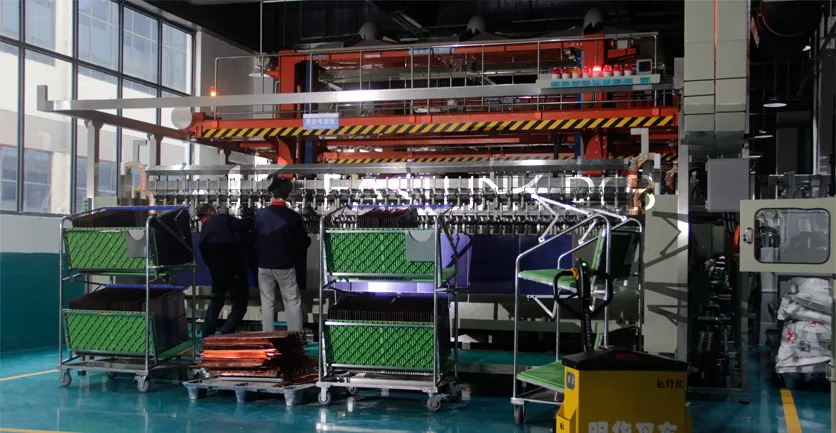
In the automotive electronics supply chain, selecting a PCB manufacturing partner goes far beyond a price-per-board evaluation. It demands a holistic assessment of the fabricator’s engineering expertise, process capabilities, and quality infrastructure.
A qualified automotive PCB supplier must deliver advanced manufacturing capabilities—including high-layer-count counts, fine-pitch HDI, and complex rigid-flex architectures. Furthermore, they should act as an extension of your design team, offering early-stage Design for Manufacturability feedback, stackup optimization, and thermal material selection to mitigate design risks and control mass-production costs before Gerber freeze.
Why Partner with FastlinkPCB?
Headquartered in Shenzhen and serving tier-1 automotive clients worldwide, FastlinkPCB operates in full alignment with rigorous automotive quality management standards. With fabrication capabilities extending up to 36 layers, state-of-the-art lamination equipment, and end-to-end quality assurance, we deliver fully compliant PCB solutions for European, North American, and global automotive markets.
If you are developing automotive electronics, EV, ADAS, or industrial control projects, welcome to contact FastlinkPCB for PCB manufacturing evaluation and engineering support.