

- On August 17, 2026
- In blog
Medical PCB Assembly: Guide to Standards, Quality Control, and Manufacturing
Medical devices directly impact human lives, leaving zero margin for failure. At the core of these life-critical systems, medical PCBA serves as the functional heart driving precision, performance, and operational longevity.
What defines medical PCBA, and why are its assembly standards drastically more stringent than those for standard consumer electronics?
As a manufacturing partner dedicated to high-reliability electronics, FastlinkPCB operates in full compliance with ISO 13485 quality management systems and IPC Class 3 manufacturing standards. Backed by Class 10,000 cleanrooms and advanced 3D AOI and AXI automated inspection equipment, FastlinkPCB delivers end-to-end quality assurance. This guide breaks down medical PCBA regulatory compliance, key technical challenges, quality control protocols, and best practices for selecting a trusted manufacturing partner.
Why Regulatory Certifications Are Critical for Medical PCB Assembly
Medical devices directly impact human lives, demanding absolute adherence to stringent regulatory frameworks that guarantee patient safety and operational efficacy. These mandatory standards extend directly to the core electronics driving the equipment—the PCB assemblies. Partnering with a fully certified PCBA manufacturer is essential to guaranteeing hardware reliability and regulatory approval.
- ISO 13485: Recognized as the global gold standard for medical device manufacturing, ISO 13485 goes beyond standard production capability. It mandates comprehensive lifecycle risk management, rigorous document control, and continuous process optimization. Operating under this framework ensures consistent high-yield production while mitigating component failure risks in critical care environments.
- Structured Risk Management Protocols: ISO 13485 places heavy emphasis on proactive risk mitigation. Certified suppliers deploy predictive engineering methodologies, utilizing FMEA to isolate and evaluate potential design flaws, and FTA to pinpoint root causes before production begins—preventing device failures at the source.
- Full-Process Traceability: Regulatory agencies mandate complete material and process tracking for all medical electronics. Certified manufacturers log component batch numbers, processing parameters, and inspection data, integrating PLM systems for automated control. In the event of a field anomaly, this data enables rapid root-cause isolation and immediate corrective action implementation.
- RoHS & REACH Environmental Compliance: All active/passive components, solder alloys, and chemical auxiliary materials must strictly comply with non-toxic, environmental, and biocompatibility standards to protect both patients and healthcare operators.
Technical Challenges & Failure Prevention in Medical PCBA
Even established electronics manufacturers encounter severe operational hurdles when scaling production to meet stringent medical standards. Below are the six most prevalent failure modes in medical hardware manufacturing, alongside their technical solutions.
1.Maintaining Strict Batch-to-Batch Consistency
A frequent industry pitfall involves suppliers secretly substituting component approved-vendor-list parts or tweaking reflow parameters across subsequent production runs following initial NPI sign-off. In regulated medical device manufacturing, even minute bill-of-materials or thermal profile shifts can void regulatory approvals, triggering costly re-validation cycles that stall market delivery.
2.Incomplete Traceability
During regulatory audits or field component failures, engineers must trace the entire manufacturing lifecycle of a specific board—from exact raw component reel batch numbers down to automated reflow thermal logs. Lacking centralized enterprise documentation leaves OEMs vulnerable to severe compliance penalties and prevents precise batch containment during product recalls.
3.Compliance Documentation
CE marking, FDA 510(k) submissions, and ISO audits demand exhaustive, fully documented manufacturing batch records. Conventional SMT assemblers rarely generate audit-grade records by default. Discovering documentation gaps during regulatory review causes severe certification delays. High-reliability partners maintain complete compliance dossiers starting from initial NPI runs.
4.Unauthorized Component Substitution
During supply chain disruptions, unvetted assemblers may introduce second-source components without customer notification. In medical hardware, even pin-compatible alternatives can alter dielectric properties, propagation delay, or EMC performance, compromising clinical functionality. Any BOM revision must follow transparent PCN protocols requiring explicit customer engineering sign-off.
5.Bypassing Pilot Run Validation
Transitioning directly from early prototypes to volume production introduces significant manufacturing risk. Without a dedicated NPI pilot run to stress-test stencil apertures, reflow profiles, and AOI inspection algorithms under volume conditions, latent process defects surface during mass production—where scrap costs and field risks peak.
6.Solder Joint Voiding
Medical electronics regularly endure ambient thermal cycling, continuous mechanical vibration, and uninterrupted 24/7 duty cycles. Improper SMT reflow profile optimization, poor flux activation, or uneven stencil aperture deposition introduce micro-voids, tin whiskers, or cold solder joints. While these micro-defects often bypass basic continuity testing at the factory, they inevitably cause intermittent field failures in critical care applications.
How to Select a Reliable Medical PCB Assembly Manufacturer
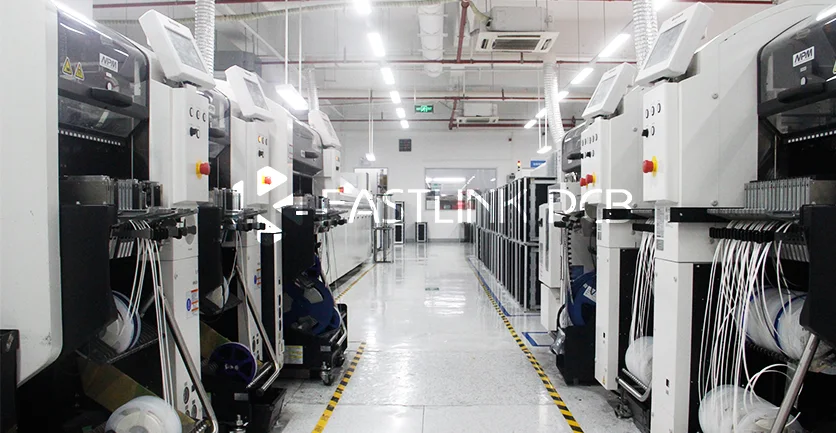
In medical electronics, PCBA quality directly determines equipment performance and patient safety. FastlinkPCB recognizes this critical responsibility, delivering manufacturing guarantees across four core dimensions:
Industry Regulatory Compliance
FastlinkPCB operates under full ISO 13485 certification and builds exclusively to IPC-A-610 Class 3 high-reliability standards. Routine third-party audits ensure ongoing certification validity, establishing end-to-end regulatory compliance from raw material entry through final assembly.
Controlled Cleanroom Manufacturing
Production takes place inside standardized medical-grade cleanroom facilities featuring automated HVAC temperature and humidity control, ESD protection protocols, and multi-stage HEPA air filtration. Every manufacturing step—from SMT stencil printing to final protective packaging—is executed within a controlled environment.
Closed-Loop Inspection & Quality Assurance
FastlinkPCB deploys a multi-stage inspection framework across the entire assembly line:
- SPI: Monitors solder paste deposit volume, height, and alignment post-printing.
- AOI: Detects component placement offsets, polarity reversals, and solder fillet defects.
- X-Ray: Inspects hidden solder joint voiding under BGA and bottom-terminated packages.
- In-Circuit & Flying Probe Testing: Verifies netlist electrical continuity, isolation, and passive values.
- Custom Functional Testing: Simulates real-world operational environments to validate complete system performance.
Healthcare Domain Expertise & Proven Track Record
With extensive experience across life-critical healthcare applications, FastlinkPCB has manufactured PCBA hardware for patient monitors, mechanical ventilators, and diagnostic imaging devices. Deep familiarization with medical compliance allows engineering teams to identify DFM risks early, optimize component selection, and accelerate time-to-market.
Partner with FastlinkPCB
Looking for a trusted medical PCBA manufacturing partner? Contact the FastlinkPCB engineering team today to request a DFM review or a PCB manufacturing quote for your medical device project.